
The Office Is Evolving - From Walls to Intelligence
Once upon a time, an office was just a box with windows and fluorescent lights. You showed up, sat down, and worked.
Now, the building itself works too.
Across the U.S., commercial real estate is shifting from “managed property” to thinking ecosystems—structures that breathe, adjust, and even predict. Coffee machines still matter, sure, but the real decision-maker isn’t the building manager anymore. It’s an algorithm.
Artificial intelligence has quietly moved from buzzword to backbone. And it’s changing how buildings consume energy, manage people, and stay secure.
The Invisible Building Manager
Tenants no longer rent just square footage. They’re paying for experience—comfort, sustainability, safety, and speed.
Behind all that? AI.
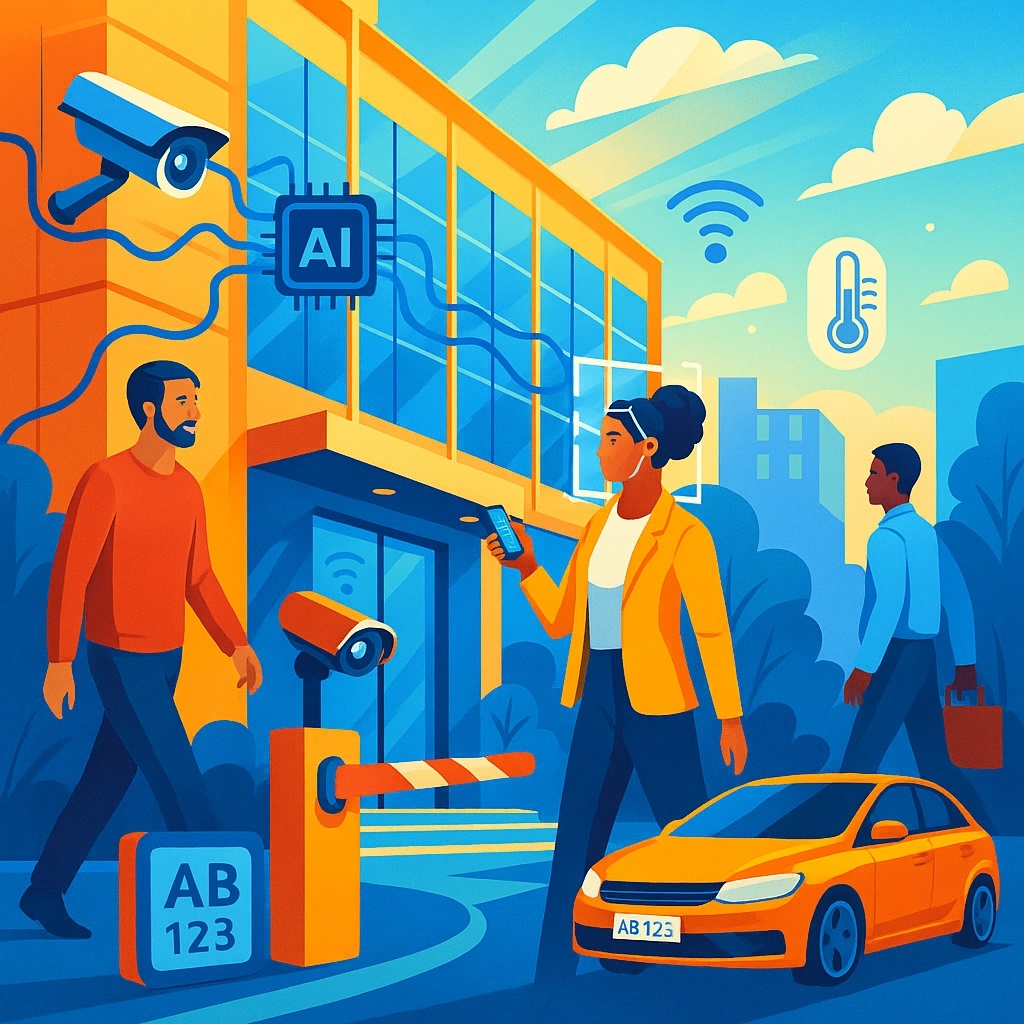
In modern CRE, artificial intelligence acts like an invisible director orchestrating tens of thousands of data points: temperature sensors, cameras, badge readers, lighting grids, HVAC units, and parking gates. The result?
A building that knows when to wake up, cool down, and lock up—all without being told.
Three Reasons AI Is Becoming the New Standard
1. Sustainability without slogans
AI-driven analytics monitor how people actually use a space. Lights dim when no one’s around. Airflow adjusts to occupancy. Energy waste drops by double digits. Carbon footprints shrink—without needing another sustainability committee.
2. Comfort on autopilot
The system learns from human behavior. It knows when meeting rooms sit empty and when the 8 a.m. crowd floods the lobby. It fine-tunes temperature, light, and air in real time. Workers feel the comfort; owners feel the savings.
3. Security meets accessibility
Goodbye, plastic access cards.
AI-based identity systems recognize faces, track movement, and spot anomalies faster than any security guard could. Employees breeze in hands-free; guests check in seamlessly. Behind the scenes, machine learning monitors patterns and flags anything unusual—long before it becomes a problem.
When Cameras Start to Think
Traditional CCTV was dumb: record, rewind, repeat.
Today’s AI video systems see, think, and decide.
A single smart camera can detect a familiar face, recognize suspicious behavior, or notice an abandoned backpack—and send alerts in seconds. These aren’t futuristic prototypes; they’re in active use across North America in office towers, hospitals, and airports.
Even maintenance gets an upgrade. Cameras now diagnose their own health, flagging when lenses are dirty or signals drop.
And then there’s parking—once the most frustrating part of the commute.
License-plate recognition now manages gates automatically. Pull up, and the barrier lifts—no tickets, no attendants, no contact.
For property managers, it’s fewer staff and fewer errors. For tenants, it’s time back in their day.
Smart cameras have become the building’s nervous system. They don’t just watch—they understand.
Don’t Build Experiments. Build Reliability.
For property owners, technology is both a gift and a test.
AI brings incredible potential, but it also demands discipline.
Systems should continue to function even without Internet connectivity. Cloud features are great—until the cloud disconnects. The key is redundancy and autonomy.
Legal agreements should define who’s responsible when AI makes a decision—or fails to. Because while “smart” is great marketing, reliable keeps the lights on.
The Next Frontier: Self-Learning Security
What happens when a building doesn’t just respond—but anticipates?
Future AI platforms will predict where an incident might occur, strengthen monitoring in advance, and coordinate all sensors into one adaptive surveillance web—with no blind spots.
Think of it as situational awareness for architecture.
The parking gate that recognizes your car is just the beginning. Soon, every corridor, lobby, and elevator will interact as part of a collective digital mind—one that safeguards people as naturally as lungs regulate breath.
The Living Building
An office is no longer inert space—it’s a living organism.
Sensors act as senses. AI serves as the brain.
It learns, adapts, and improves. It doesn’t just see what happens—it understands why.
Smart buildings aren’t science fiction anymore. They’re the logical evolution of how we inhabit space. The question isn’t whether AI belongs in security or parking systems—
it’s who will be the first to trust it completely.